Skin Tightening vs. Skin Resurfacing: What's the Difference?
When researching professional skin-rejuvenation treatments, you may come across terms such as skin tightening and skin resurfacing.
Although these services may appear together on a med spa's treatment menu, they are not interchangeable.
They describe different treatment goals, and the procedures available within each category can vary significantly.
What Is Skin Tightening?
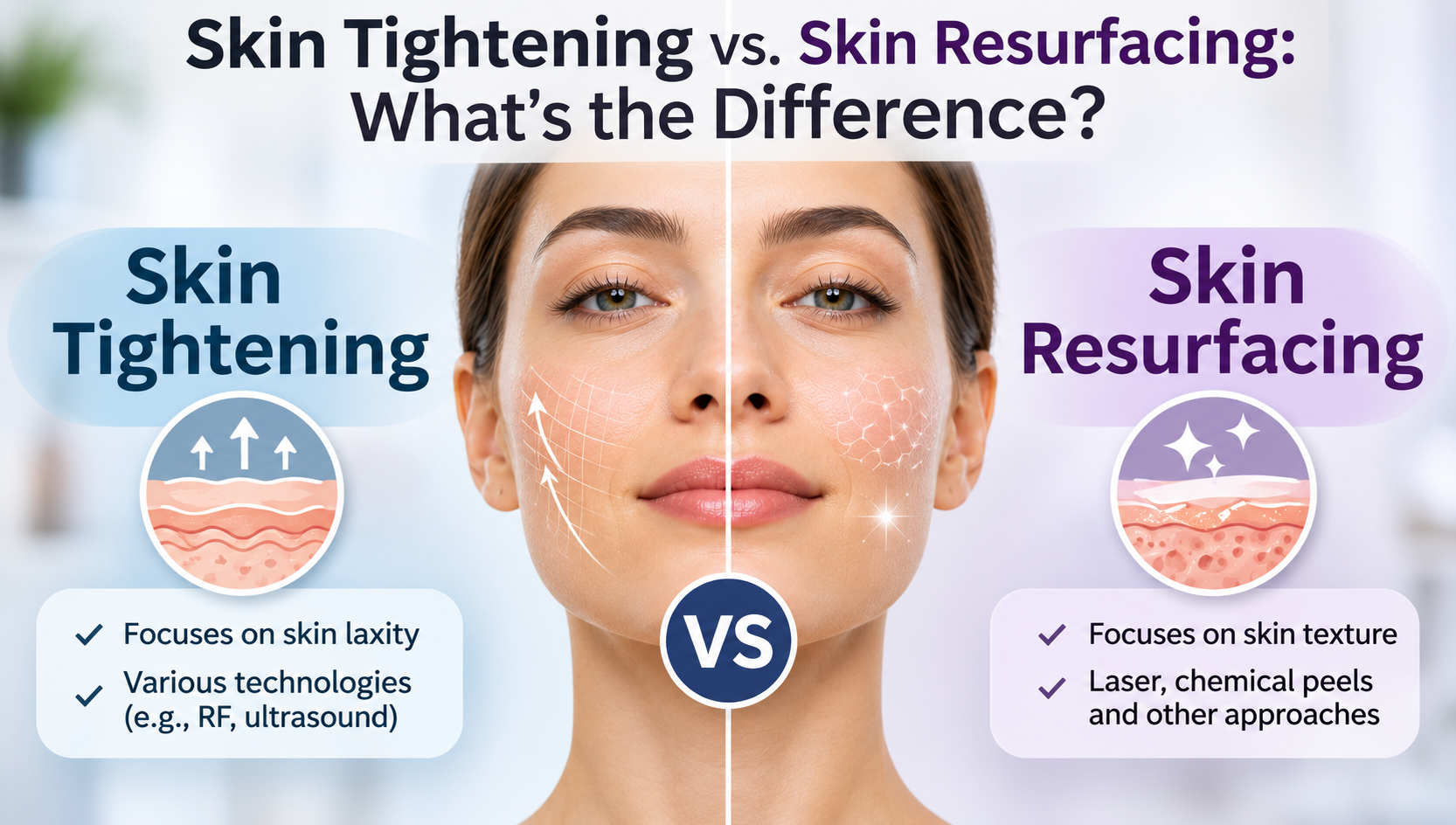
Skin tightening is a broad term used for aesthetic procedures intended to address certain skin-laxity concerns.
Depending on the clinic, skin-tightening services may involve different technologies and treatment approaches.
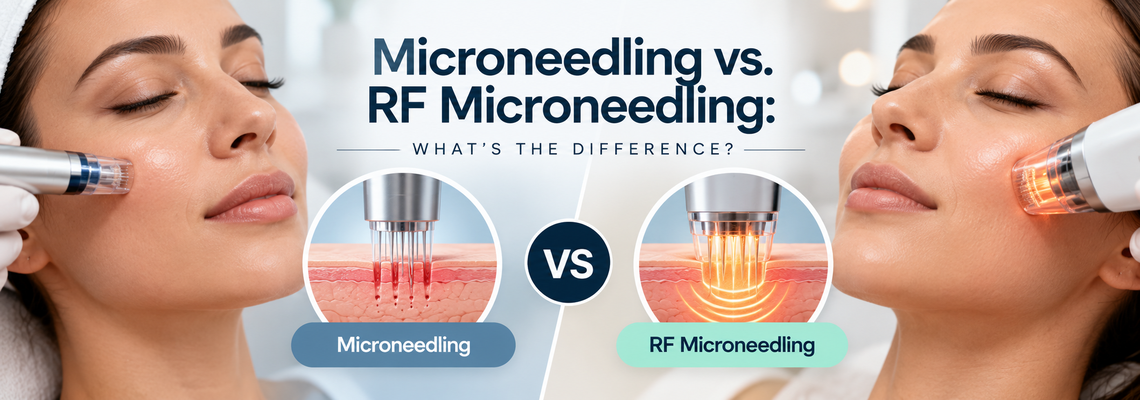
These can include selected energy-based procedures, although the devices, treatment settings, and appropriate uses differ. The American Society of Plastic Surgeons discusses technologies such as radiofrequency and ultrasound for nonsurgical skin tightening.
A provider should explain the specific procedure being recommended rather than relying solely on the broad label of skin tightening.
What Is Skin Resurfacing?
Skin resurfacing generally refers to procedures intended to modify or renew aspects of the skin's surface.
People may research resurfacing treatments when concerned about uneven texture, certain fine lines, or the appearance of some types of scarring.
Skin-resurfacing procedures can include different approaches, such as selected laser treatments, chemical peels, and other professional procedures.
Treatment depth, recovery, risks, and suitability vary.
Skin Tightening vs. Skin Resurfacing
| Feature | Skin Tightening | Skin Resurfacing |
|---|---|---|
| Primary treatment focus | Certain laxity concerns | Surface texture and related concerns |
| Procedures | Various technologies | Laser, chemical and other resurfacing approaches |
| Treatment depth | Depends on technology | Depends on procedure |
| Recovery | Varies | Varies |
| Consultation | Recommended | Recommended |
Some technologies may be used in more than one treatment category, so the distinction is not always absolute.
Which Treatment Should You Research?
Start by identifying your primary concern rather than choosing a treatment name.
For example, someone concerned about uneven skin texture may need to explore different options from someone whose primary concern is skin laxity.
Other factors can include:
- Skin characteristics
- Treatment area
- Medical history
- Previous procedures
- Recovery considerations
- Available technology
- Provider assessment
A qualified provider can discuss which available procedures may be appropriate.
What Should You Know About Recovery?
Recovery can differ considerably between procedures.
Some treatments may involve temporary redness or sensitivity, while more intensive procedures may require additional aftercare or downtime. Mayo Clinic's guidance on laser resurfacing explains how recovery and potential side effects differ between ablative and nonablative laser procedures.
Ask the provider about the specific device or procedure, potential risks, and recovery requirements.
Questions to Ask Your Provider
Before booking, consider asking:
- What specific procedure are you recommending?
- What concern is it intended to address?
- What technology will be used?
- Who will perform the procedure?
- What are the potential risks and limitations?
- What should I expect afterward?
- Are alternative treatments available?
Explore Skin Rejuvenation Providers
The DigiMEDSPA Directory allows consumers to discover participating med spas offering various aesthetic services.
Explore Skin Tightening and Skin Resurfacing to learn about treatment categories and available providers.
Frequently Asked Questions
Are skin tightening and skin resurfacing the same?
No. Skin tightening generally focuses on certain laxity concerns, while skin resurfacing generally focuses on aspects of the skin's surface.
Can one procedure address multiple concerns?
Some technologies may be used for different concerns, but suitability depends on the procedure and individual assessment.
How do I choose between the two?
Discuss your primary concern, treatment options, risks, and expectations with an appropriately qualified provider.

Call For Questions


 Mary, DigiMEDSPA