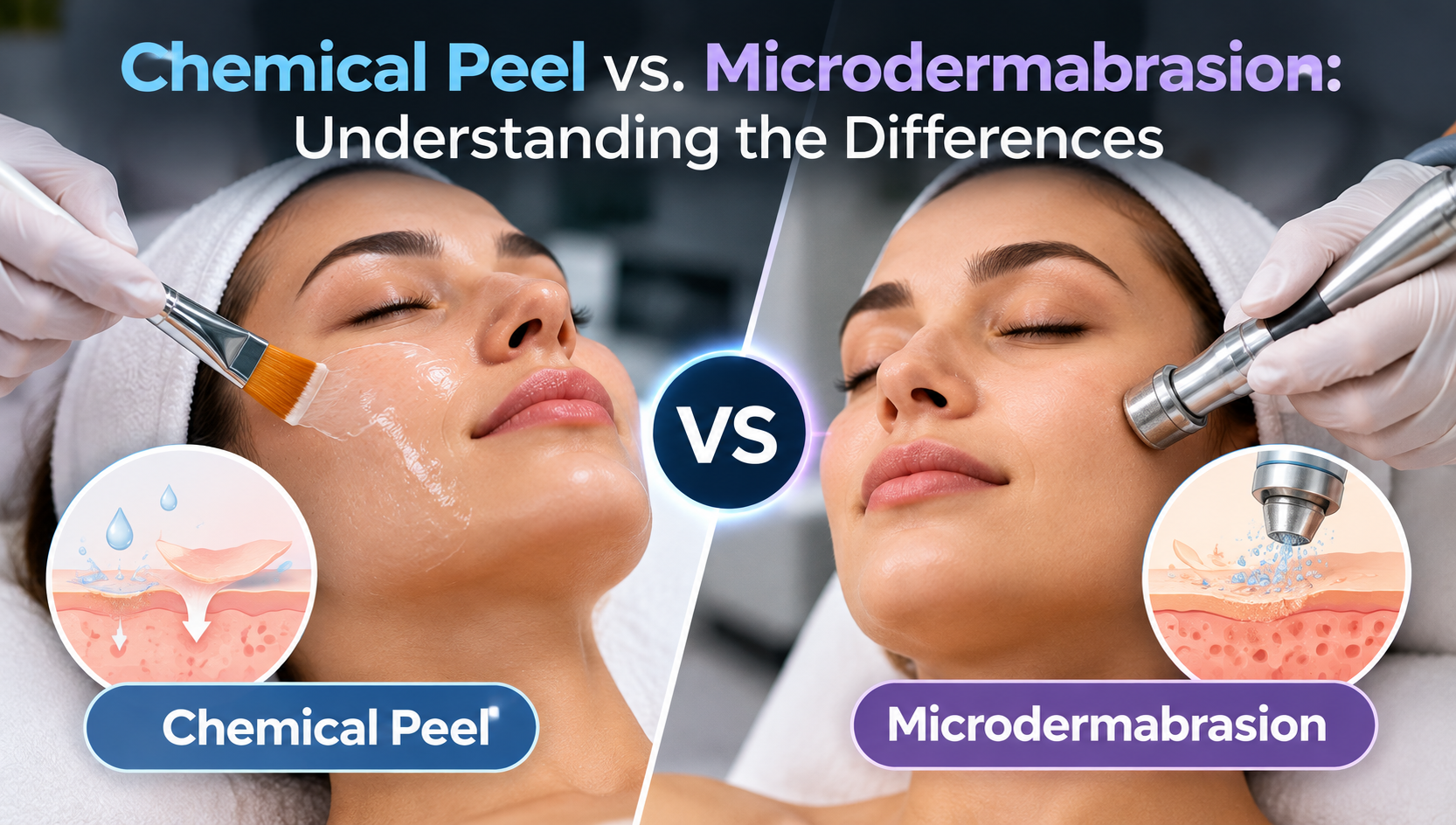
Chemical Peel vs. Microdermabrasion: Understanding the Differences
Chemical peels and microdermabrasion are two professional skincare procedures that people may encounter when researching exfoliation and skin-resurfacing services.
Although both involve exfoliation, they use different methods and may have different treatment considerations.
Understanding how they differ can help you prepare for a consultation.
What Is a Chemical Peel?
A chemical peel involves applying a chemical solution to the skin to produce a controlled exfoliating effect.
Chemical peels can vary considerably in their ingredients, strength, depth, and intended treatment approach.
Some are relatively superficial, while deeper procedures involve additional medical considerations and recovery requirements.
According to the American Academy of Dermatology, preparation, healing time, and aftercare depend on the type and depth of the peel.
A provider should explain the specific peel being offered and whether it is appropriate for your skin.
What Is Microdermabrasion?
Microdermabrasion is a mechanical exfoliation procedure that removes material from the outermost surface of the skin using specialized equipment.
Different devices and techniques may be used.
The American Society of Plastic Surgeons describes techniques using exfoliating crystals or a diamond-tipped applicator.
People often research microdermabrasion as part of professional skincare and surface-exfoliation services.
Chemical Peel vs. Microdermabrasion
| Feature | Chemical Peel | Microdermabrasion |
|---|---|---|
| Exfoliation method | Chemical solution | Mechanical exfoliation |
| Treatment intensity | Varies by peel type and depth | Varies by device and technique |
| Recovery | Depends significantly on peel depth | Depends on treatment intensity |
| Provider assessment | Important | Important |
| Aftercare | Based on peel and skin response | Based on procedure and skin response |
Neither procedure is automatically suitable for every skin type or concern.
Which Treatment Is Appropriate for Your Skin?
The answer depends on your individual circumstances.
A provider may consider skin sensitivity, medical history, current skincare products, previous procedures, and the concern you want to address.
For example, someone using certain topical skincare ingredients may need specific preparation instructions before undergoing an exfoliating procedure.
The American Society for Dermatologic Surgery also identifies several skin conditions that may affect suitability for microdermabrasion, emphasizing the importance of individual assessment.
A consultation is particularly important when considering stronger chemical peels.
What About Downtime?
Recovery depends on the procedure performed.
Chemical peels can involve different degrees of peeling, redness, sensitivity, and recovery depending on their depth.
The American Academy of Dermatology's chemical peel recovery guidance explains that superficial peels may heal within several days, while medium and deep peels can require longer recovery periods.
Microdermabrasion may also cause temporary skin responses, although it generally involves less downtime than deeper resurfacing procedures.
Ask the provider what to expect with the exact procedure being offered rather than relying on general treatment descriptions.
Questions to Ask Before Treatment
- What type of chemical peel or microdermabrasion device do you use?
- What is the intended treatment depth or intensity?
- Is the procedure appropriate for my skin?
- What are the potential side effects?
- How should I prepare?
- What aftercare is recommended?
- Are there other options I should consider?
Finding Professional Exfoliation Treatments
DigiMEDSPA helps consumers explore med spas offering professional skincare services and compare available clinic information.
You can begin by researching Chemical Peels and Microdermabrasion before contacting a provider.
Frequently Asked Questions
Is a chemical peel the same as microdermabrasion?
No. Chemical peels use chemical solutions, while microdermabrasion uses mechanical exfoliation.
Do all chemical peels involve significant peeling?
No. Visible effects and recovery depend on the type and depth of the peel.
Can both procedures be offered at med spas?
Yes, depending on the clinic, provider qualifications, applicable regulations, and services available.

Call For Questions



 Mary