 Jawline Contouring
Broad-Spectrum Light Treatment or Fractional Laser: Which One Delivers the Better Glow?
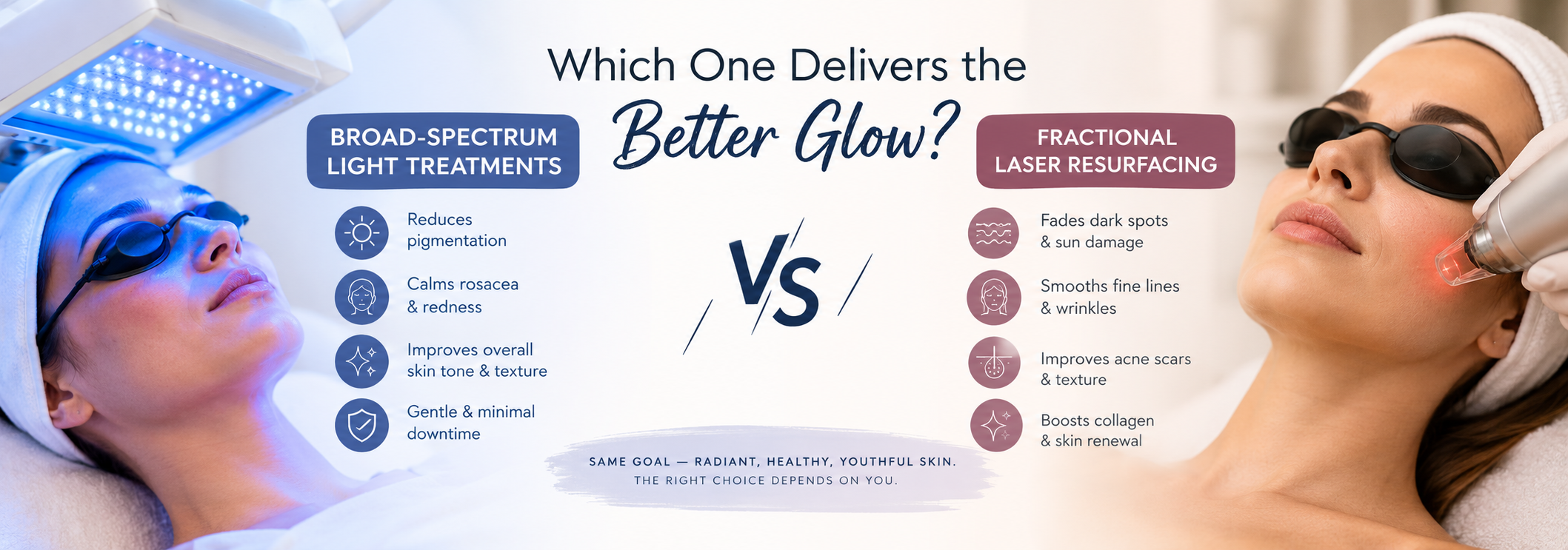
Want brighter, smoother, younger-looking skin without going under the knife? You’re not alone. In 2019, over 4.1 million light-, laser-, or energy-based treatments were performed in the U.S.—and two popular options are broad-spectrum light treatments and fractional laser resurfacing.
Both help fade dark spots, soften fine lines, and refresh dull-looking skin, but they work differently and deliver unique results. This guide explains how each treatment works, their benefits, and how to choose the option that best aligns with your skin goals.
Understanding the Basics: Broad-Spectrum Light and Fractional Laser Explained
What is Broad-Spectrum Light Therapy?
Broad-spectrum light therapy uses broad-spectrum light with multiple wavelengths (400 to 1400 nm) to target a variety of skin concerns. Unlike traditional lasers, these treatments deliver controlled pulses of light that penetrate the skin while minimizing damage to the surface.
They are commonly used to improve:
- Sun damage
- Age spots
- Rosacea
- Hyperpigmentation
- Fine lines
- Enlarged pores
These treatments are generally most effective for light to medium skin tones and work especially well for pigmentation-related concerns. The first device in this category received FDA clearance in 1995 for treating telangiectasias (spider veins) in the lower legs.
What is Fractional Laser?
Fractional laser resurfacing uses a laser beam divided into thousands of microscopic treatment zones. This approach creates controlled micro-injuries in targeted areas of the skin, stimulating collagen production and encouraging healthy skin renewal.
There are two primary categories:
- Ablative fractional lasers: More intensive and commonly recommended for deeper wrinkles and acne scars.
- Non-ablative fractional lasers: Less aggressive, require minimal downtime, and are often chosen for milder skin concerns.
Fractional laser treatments are commonly used to improve:
- Acne scars
- Wrinkles
- Uneven skin texture
- Stretch marks
- Deep sun damage
Treatment Goals: Broad-Spectrum Light Treatment vs. Fractional Laser
Broad-Spectrum Light Treatment for Even Skin Tone and Brightness
If your primary concern is uneven pigmentation, redness, or sun damage, broad-spectrum light treatment can be an excellent option. It works particularly well for reducing the appearance of brown spots and redness, leaving the complexion brighter and more even.
Fractional Laser for Texture and Deep Scars
For improving skin texture, fine lines, and acne scars, fractional laser is generally the better choice. It reaches deeper layers of the skin, stimulating collagen remodeling and delivering long-term skin rejuvenation.
Skin Types and Safety: Which Treatment Is Right for You?
Broad-Spectrum Light Treatment by Skin Tone
Broad-spectrum light treatments are generally most effective for Fitzpatrick Skin Types I–III (lighter skin tones). Individuals with darker skin tones may have a higher risk of pigmentation changes due to the broad-spectrum light used during treatment.
Fractional Laser for Different Skin Tones
While non-ablative fractional lasers can often be performed on darker skin tones, they require experienced providers to minimize pigmentation concerns. Ablative treatments are more intensive and are generally recommended for lighter skin tones unless customized by an experienced professional.
In a study of 730 patients treated with fractional lasers, the overall complication rate was low at 4.2%, with all reported issues resolving completely.
Downtime and Recovery: What to Expect
Recovery After Broad-Spectrum Light Treatment
These treatments involve minimal downtime, making them a popular option for people with busy lifestyles. Most patients experience:
- Mild redness or swelling lasting 24–48 hours
- Temporary darkening of pigmented spots before they naturally fade
- Best results after 3–5 treatment sessions spaced approximately 3–4 weeks apart
Fractional Laser Recovery
Fractional laser treatments typically involve more downtime, particularly with ablative procedures. Common side effects include:
- Redness and swelling for 3–7 days
- Peeling or flaking skin
- Mild scabbing in treated areas
Non-ablative fractional lasers generally require only 1–3 days of recovery but may require additional sessions to achieve optimal results.
Results Comparison: Which One Delivers a Better Glow?
Results and Longevity of Broad-Spectrum Light Treatments
Broad-spectrum light treatments can deliver a brighter, more radiant complexion after each session. Improvements in pigmentation, redness, and the appearance of enlarged pores typically become more noticeable over time.
Duration of Results: 6–12 months with proper sun protection
Best for: Surface-level skin concerns, uneven pigmentation, and redness.
Fractional Laser Results
Fractional laser treatments provide deeper skin rejuvenation by improving skin texture, reducing the appearance of wrinkles, and minimizing acne scars. Because these treatments stimulate collagen remodeling, full results may continue to develop over several weeks.
Duration of Results: 1–2 years, depending on lifestyle and skincare habits.
Best for: Aging skin, acne scarring, deeper wrinkles, and uneven skin texture.
Pain and Comfort: How Do the Treatments Feel?
Comfort During Broad-Spectrum Light Treatments
Broad-spectrum light treatments are generally well tolerated. Most patients describe the sensation as similar to a rubber band lightly snapping against the skin. A cooling gel is commonly applied before treatment to improve comfort.
Fractional Laser Sensation
Fractional laser treatments are typically more intensive. Ablative procedures may require topical numbing medication or mild sedation, while non-ablative treatments usually create a warm, prickling sensation that is generally manageable with a topical numbing cream.
Cost Comparison: Broad-Spectrum Light Treatments vs. Fractional Laser
Cost of Broad-Spectrum Light Treatments
A broad-spectrum light treatment session typically costs around $720, although pricing may reach $1,800 depending on the provider and treatment area. While one session may provide subtle improvement, 3–4 sessions spaced 4–6 weeks apart are often recommended for noticeable, longer-lasting results.
Average Cost of Fractional Laser Treatment
Fractional laser resurfacing averages approximately $1,509 per session, with prices ranging from $150 to $3,200, depending on the treatment area and laser technology used. A typical session averages around $1,284, with most patients benefiting from 3–6 sessions scheduled 2–4 weeks apart. Some ablative fractional laser treatments may achieve desired results in a single session. Although the upfront cost is higher, the longer-lasting improvements may reduce the need for frequent maintenance treatments.
Choosing the Right Treatment for Your Skin Goals
Deciding between broad-spectrum light treatments and fractional laser resurfacing depends on your skin concerns, skin tone, and the results you hope to achieve.
Broad-spectrum light treatments use controlled pulses of light to target pigmentation concerns such as sunspots, redness, rosacea, and uneven skin tone. They are best suited for people with lighter skin tones seeking overall brightening and improvement of mild skin imperfections. Because these treatments are non-ablative, they involve little to no downtime.
Fractional laser resurfacing works deeper within the skin by creating controlled microscopic treatment zones. This stimulates collagen production while improving texture, acne scars, fine lines, and deeper wrinkles. Although recovery is typically longer than with broad-spectrum light treatments, the improvements are often more dramatic for advanced skin concerns.
In summary:
- Choose broad-spectrum light treatments if your primary concerns are redness, sun damage, pigmentation, or uneven skin tone and you prefer minimal downtime.
- Choose fractional laser resurfacing if your goals include improving deeper wrinkles, acne scars, or significant texture concerns and you’re comfortable with a longer recovery period.
Consulting a licensed skincare professional is the best way to determine which treatment best aligns with your unique skin goals.
Conclusion: Consult a Med SPA for Personalized Skin Rejuvenation
Both broad-spectrum light treatments and fractional laser resurfacing are effective options for improving skin tone, texture, and overall radiance. The ideal treatment depends on your skin type, concerns, desired results, and tolerance for downtime.
If you’re unsure which treatment is right for you, consult a licensed skincare professional or a qualified Med SPA provider. For personalized recommendations and to find trusted professionals in your area, explore the DigiMEDSPA Directory, where you can browse verified Med SPA listings, patient reviews, and highly rated aesthetic providers.

Call For Questions


 Mary, DigiMEDSPA